


3-Pack – Organic Acai Berry Powder, 4oz
$68.85 Original price was: $68.85.$35.85Current price is: $35.85.
63 in stock
Maqui & Acai: the Anthocyanin Advantage
Hey Everyone!
These Anthocyanin Antioxidants keep us young in a big way. As you will see in the clinical studies below, anthocyanins are some of the top antioxidants in the world at combatting free radicals, reducing inflammation, improving vision and night vision, keeping our brain sharp and preventing age-related memory decline, keeping our skins appearance young, protecting against heart problems, helping joint discomfort, helping certain lung conditions, promoting a healthy gut, and so much more.
These anthocyanin antioxidants are what give these wild berries their deep purple color. Maqui and Acai rank as the top two foods in the world for anthocyanin content. While Acai is still incredibly rich—packing 3–4 times more antioxidants than raspberries, blueberries, blackberries, and strawberries—Maqui takes it even further, containing up to three times more anthocyanins than Acai. In comparison, Maqui is simply out of control with them.
What’s so cool is that you can use these Anthocyanin-rich dark purple fluffy powders in a smoothie, açaí bowl, chia bowl, raw cake, or whatever recipe that you want to create. It will turn your smoothie or recipe into a beautiful dark anthocyanin-rich deep purple color. Some people just love to eat these berry powders by the spoonful straight from the bag it’s so good.
If you all remember back in the day, this is the same Acai Berry Powder that Angela used to eat by the bag, lol. Literally, she would eat one bag in a sitting. One of the reasons why it tastes so unbelievably good, is because Acai Berries have a unique nutritional profile for a fruit. They are somewhat high in fat and low in sugar. It’s the high fat content that gives it this addictive taste. It’s the puree of the Acai Berry Freeze Dried, and it comes out in this amazing fluffy texture. It tastes berry-like, but almost nutty and creamy at the same time, and it’s simply just Acai.
As seen in the clinical study here our freeze-drying method is the most effective drying method there is, because it retains most of the potent antioxidants compared to all other methods.
I have one customer who literally orders like 30-60 bags of the Acai Powder at a time, and I had another customer tell me how much they love and benefit from the Maqui Berry Powder. Our Maqui Powder comes from the same exact supplier as the Acai Powder, and therefore it has the same exact incredible amazing fluffy texture. The Maqui Powder is just a tad more tart than the Acai Berry Powder.
Brace yourself, as we move on to an onslaught of clinical studies. There are a lot of them. Therefore, I made categories of the clinical studies in bold. You can just scroll down to the ones you are interested in most.
Cognitive Function
We’ll start with how these berries are extremely beneficial for our cognitive function and eyes. Then we’ll move on to how it’s great for our skin, gut, cholesterol, blood pressure, and a slew of other things.
A recent review of randomized control trials here, which is the gold standard in scientific research, suggests that the Anthocyanins in Acai and Maqui boost your memory, attention, and brain processing speed. Another review of seven short- and long-term studies here, claims that diets rich in anthocyanins may improve verbal learning and memory in children, adults, and older adults with cognitive impairment. At the studies here, and here, they suggest that certain components in berries, including anthocyanins, may help slow the progression of age-related memory decline.
As seen in the study here, the many plant compounds in Acai could protect your brain from damage as you age. As seen at the study here, the antioxidants in Acai counteract the damaging effects of inflammation and oxidation in brain cells, which can negatively affect memory and learning. In the study here, Acai even helped improve memory in aging rats.
One of the ways in which the brain stays healthy is by cleaning up cells that are toxic or no longer working, a process known as autophagy. Autophagy makes way for new nerves to form, enhancing communication between brain cells. As you age, this process works less efficiently. However, in lab tests here, Acai has helped stimulate this “housekeeping” response in brain cells.
Lastly, at the study here, in a 12-week study, older adults with mild to moderate cognitive decline saw significant improvements in verbal fluency and short- and long-term memory after drinking 6.6 ounces (200 mL) of anthocyanin-rich cherry juice. Furthermore, there are several studies that have shown profound brain protective effects in lab rats.
Vision & Eyes
Now let us move on to the clinical studies about how these berries have the potential to help our vision and eyes.
Anthocyanin pigments are important nutraceuticals in maintaining good vision. Anthocyanin-rich berries have long been known for their benefits to the eyes and are often associated with enhanced night vision.
In the clinical test-tube study here, they found that Maqui Berry extract prevented light-induced damage in eye cells, suggesting that the fruit may be beneficial for eye health. Furthermore, at the studies here, and here, humans with dry eyes found that 30–60 mg of a concentrated Maqui Berry extract each day increased tear production by roughly 50%.
The following few studies are from other anthocyanin-rich foods, which have a positive impact on our eye health and vision. Keep in mind that Maqui Berry has more anthocyanins compared to any of these following foods, while Acai Berry is comparable. Maqui is just out of control with over 3x’s more Anthocyanins compared to any other food.
In the study here, 132 patients with eye pressure concerns were given two daily capsules of bilberry-derived anthocyanins (each containing 60 mg of anthocyanins). The supplementation led to improved visual function, as measured by the Humphrey visual field test and the minimal angle of resolution best-corrected visual acuity assessment.
In the study here, black currant anthocyanin supplementation (50mg/day) for 24 months increased ocular blood flow in 19 patients with eye pressure concerns.
In the studies here and here, anthocyanin supplementation from the seed coat of black soybean was shown to prevent chemically induced retinal degeneration in rats. Additionally, the extract suppressed human lens epithelial cell death under hydrogen peroxide-induced oxidative stress.
In the study here, oral administration of bilberry extract (containing approximately 39% anthocyanins) to six-week-old mice was shown to prevent impairment of photoreceptor cell function during retinal inflammation. In the final eye-related study here, purple corn seed extract – rich in anthocyanins – was found to reduce lens opacity and lower markers of oxidative stress.
Skin & Beauty
Shifting focus to the appearance of our skin, the anti-aging effects of Maqui berry are highlighted in the study here. Excessive exposure to ultraviolet rays from the sun can lead to premature skin aging. In test-tube studies, Maqui berry extract was found to suppress cellular damage caused by UV radiation.
Additionally, the study here suggests that anthocyanin pigments may safeguard the skin from UVB rays. Both Maqui and Acai berries are noted in this study as rich sources of anthocyanins.
Gut Health
Did you know that Acai and Maqui are also incredibly beneficial for your gut?
As seen at the studies here, and here, they suggest that the plant compounds in maqui and other berries may help reshape your gut microbiota, increasing the number of good bacteria.
This isn’t surprising, as several studies – found here, here, and here – have observed that anthocyanin intake leads to an increase in beneficial gut bacteria such as Bifidobacteria, Lactobacilli, and Actinobacteria.
As shown in the study here, one proposed mechanism behind this effect is the production of short-chain fatty acids (SCFA). When intestinal bacteria metabolize anthocyanins, they break down glycosidic bonds, leading to the formation of SCFAs and phenolic acids. These byproducts help lower pH levels in the gut, creating an environment that promotes the growth of probiotic bacteria.
Now let’s just quickly blow through a slew of extremely interesting clinical studies on the benefits of taking Acai and Maqui.
Antioxidant
As demonstrated in the clinical study here, anthocyanins neutralize free radicals through two distinct pathways. The first involves the hydroxyl group(s) on the B-ring of the anthocyanin molecule, while the second involves the oxonium ion on the C-ring. Because of their ability to scavenge free radicals via both pathways, anthocyanins rank among the most powerful antioxidants.
Anthocyanins are widely recognized as potent antioxidants and effective free radical scavengers. In a four-week clinical study here, participants who took 162 mg of maqui berry extract three times daily showed a significant reduction in blood markers of free radical damage compared to the control group.
In a large study here, diets high in these deep purple anthocyanins were associated with a 12% reduced risk of blood pressure concerns. In a Nurses Health Study here, 93,600 young and middle-aged women found that diets highest in anthocyanins were associated with a 32% reduced risk of heart attacks, compared to those lowest in these antioxidants. Furthermore, in a two-week clinical study here, smokers who took 2 grams of Maqui Berry extract twice daily had significantdecreases in measures of lung inflammation.
Weight-management & Cholesterol
In the study here, women who followed diets richest in anthocyanins showed significantly improved body composition and reduced abdominal circumference compared to those with the lowest intake of this compound. In another study here, overweight adults who consumed acai smoothies twice daily for one month experienced decreased total and “bad” LDL cholesterol levels. The study here showed that anthocyanin supplementation improved both LDL and HDL cholesterol concentrations and enhanced cholesterol removal from cells into the bloodstream.
Additionally, the study here found that acai contains plant sterols, which help prevent cholesterol absorption in the body. Animal studies here, here, and here suggest that acai may support healthier cholesterol levels by reducing total and LDL cholesterol.
In the animal studies here, here, here, here, and here, anthocyanins from Maqui and Acai had major weight-management effects from various different pathways.
There are many more studies showing that Maqui, Acai, and the Anthocyanin’s that they contain are cell-protective, prevent heart problems, prevent blood sugar imbalance, possess antimicrobial activity, and so much more.
What’s more, these berries are a joy to work with. Blend them into smoothies or fruit bowls for a vibrant, deep purple hue brimming with anthocyanins, and savor the exceptional benefits of these wild, super-potent, certified organic berries. They have the potential to help you become younger with a sharper mind, improved vision, healthier skin, balanced body composition, a thriving gut, and b>improved blood parameters.
Thanks everyone for your support!
Sincerely,
Matt
RELATED PRODUCTS
Related products
-
Sale!

Organic Ceylon Cinnamon, 8oz
$14.95Original price was: $14.95.$8.95Current price is: $8.95. Add to cart -
Sale!

Raw Organic Maqui Berry Powder, 4oz
$22.95Original price was: $22.95.$13.28Current price is: $13.28. Add to cart -
Sale!
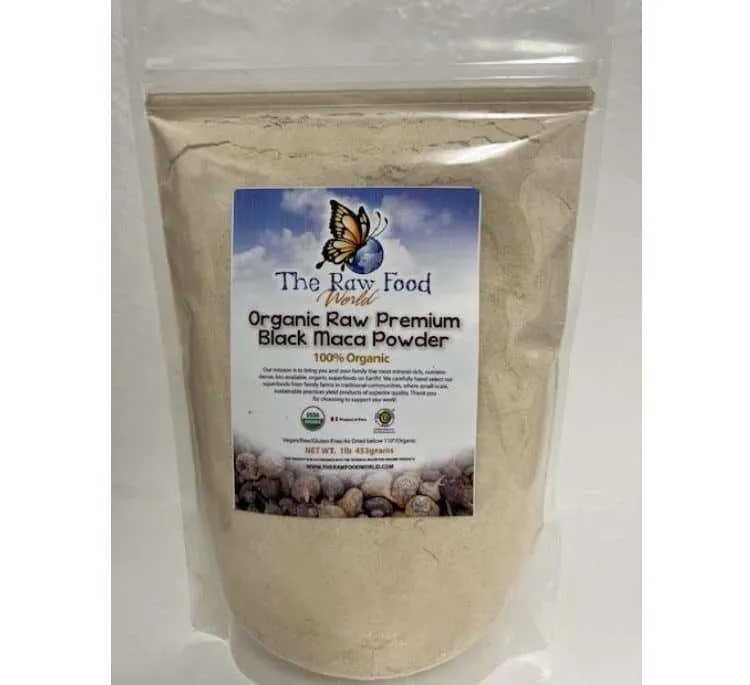
Organic Raw BLACK Maca Powder, 16oz
$34.95Original price was: $34.95.$16.61Current price is: $16.61. Add to cart -
Sale!

3-Pack – Organic Sunflower Lecithin, 8oz
$77.85Original price was: $77.85.$61.97Current price is: $61.97. Add to cart